Students Bank Brighter at Sunmark Credit Union
GET PAID.

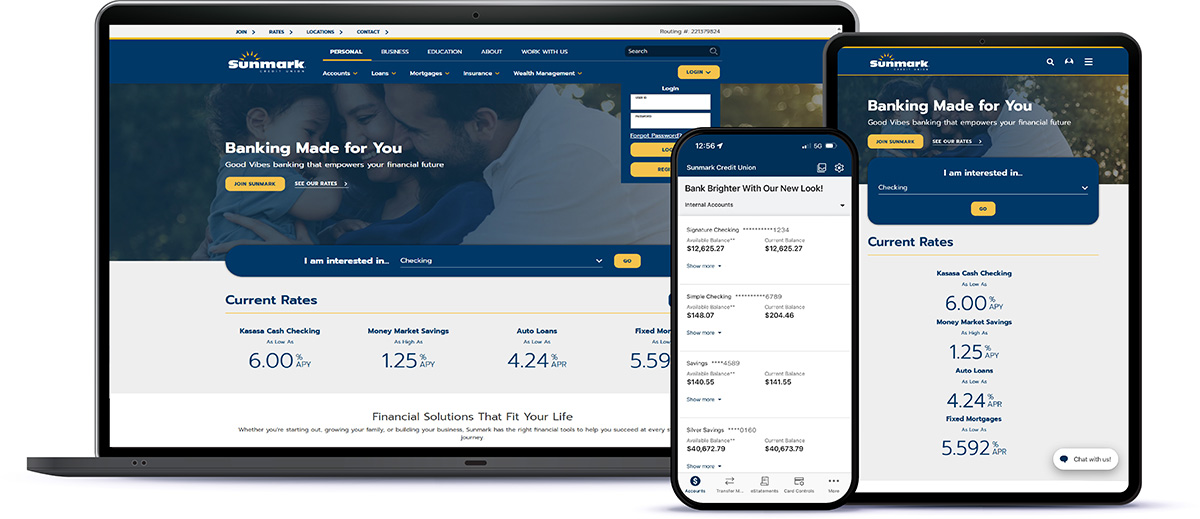
Our online and mobile banking tools are built to fit your life, not slow it down. With our digital banking tools, you can:


Not always near one of our financial centers? No worries—you’re still covered. With Shared Branching, you can walk into thousands of participating credit unions across the country and take care of your account like you’re right at home.
Why It’s a Game Changer
Built for real life, whether you’re headed to college, on a trip or just away for the weekend, Shared Branching keeps your money within reach. It’s flexibility that fits your lifestyle.
Establishing credit early can help young adults prepare for important financial milestones, such as renting an apartment, setting up utilities, refinancing loans, or completing certain employment applications.
How to Build Credit
We’re dedicated to providing products, solutions, and tools that teach healthy saving and spending habits – and as your local financial partner, we’re here to guide you throughout every life stage. Because understanding your money means more freedom, more options, and way less stress.
7/7/26
For many young adults, credit does not feel urgent until it suddenly is. Maybe you are applying for your first apartment, looking into a car loan, opening a credit card, or thinking ahead to buying a home someday. In those moments, your credit history can play a bigger role than you might expect.
Good credit can help you qualify for loans, credit cards, and better interest rates. It can also make certain everyday steps easier, like setting up utilities or getting approved for a lease. If you are starting with little or no credit history, the good news is that you can build it over time with a few smart habits.
What Your Credit Score Really Means
Your credit score is a number that helps lenders understand how you have managed financial responsibilities in the past. Most commonly used credit scoring models range from 300 to 850.
In general, a higher score may improve your chances of being approved for credit and may help you qualify for better loan terms. A lower score, or no score at all, can make borrowing more difficult or more expensive.
Your credit score is not the only thing lenders look at. They may also consider your income, current debt, employment, and the type of loan you are applying for. Still, credit is often one of the first factors reviewed when you apply for a financial product.
Why Credit Matters
Credit is often connected to major purchases, like buying a car or home. But it can affect more than borrowing.
Landlords may review your credit when you apply to rent an apartment. Utility and cell phone providers may check your credit before starting service. In some states, insurance companies may consider credit-based information when setting policy rates. Certain employers may also review credit reports for specific roles where allowed by law.
That means building credit is not just about preparing for a future loan. It is about creating a financial track record that shows you can manage commitments responsibly.
How to Start Building Credit
Starting from no credit history can feel frustrating. You may need credit to get approved, but you need someone to approve you in order to build credit.
The key is to begin small.
One common option is a secured credit card. With a secured card, you typically provide a refundable deposit that becomes your credit limit. You can use the card for small purchases and pay the balance in full each month. Before applying, make sure the card reports to the major credit bureaus so your responsible use can help build your history.
Another option is becoming an authorized user on a trusted family member’s or partner’s well-managed credit card account. If the account has a strong payment history and is reported properly, it may help you establish credit over time. This only works well if the primary cardholder uses the account responsibly.
Credit-builder loans can also be useful. These loans are designed to help people establish credit by reporting on-time payments to the credit bureaus. Some phone, utility, or rent payment services may also offer payment reporting, though availability varies by provider.
Habits That Help Your Credit Grow
Building credit is less about doing something big and more about staying consistent.
Pay your bills on time. Keep balances low. Avoid borrowing more than you can afford to repay. Be careful about opening too many accounts at once. And review your credit reports so you can catch errors or signs of fraud.
It is also smart to avoid expensive quick-fix options, like payday loans. They often come with high fees and may not help you build credit in a meaningful way.
A strong credit history does not happen overnight. It usually takes patience, steady payments, and responsible account management. But every smart step helps create a stronger financial foundation. When you understand how it works and take steps to build it carefully, you can give yourself more flexibility and confidence for whatever comes next.
Need help getting started? Sunmark’s Education Center offers financial wellness resources, credit guidance, budgeting tools, and calculators to help you better understand your money and make more confident decisions.
Explore more at sunmark.org/education.
* Youth Savings account age is 0-24. Student Checking age range is 13-24. Based on age criteria, not all Youth Savings account members will be eligible to open a student checking account. Parent/Guardian required as joint account owner for anyone under the age of 18.
^Offer effective April 1 - July 31, 2026 and subject to change without notice and may end at any time. Accounts must be opened during the promotional month of April 1 – July 31, 2026 to be eligible to receive $25.00 credit. Credit will be provided within 60 days of opening the account. Determination of eligibility for this promotion is based on membership status of primary account owner. New members are eligible to open one Youth Saving and one Student Checking account. Existing members are eligible to open one Student checking account. A 1099-INT may be issued. Can be combined with other offers at the discretion of Sunmark. Sunmark Credit Union employees and volunteers, their respective accounts, and immediate family members are not eligible. Restrictions apply. For more details, call 866.SUNMARK.

This website uses cookies in order to offer you the most relevant information. Please choose "I Accept" for optimal site performance. For more information, please visit our Privacy Policy page.